Blog | Family | Theology | Video | Video Interviews | Youth Ministry
Youth Ministry Now Lecture, Dec 2013
This my lecture from Yale Divinity School’s Youth Ministry: Now series on the children of divorce.


This my lecture from Yale Divinity School’s Youth Ministry: Now series on the children of divorce.

Andrew Root – “How Do We Talk About God Now?” Watch this Oct. 12, 2022, Faith+Lead Book Hub segment with Dr. Andrew Root, author of “Churches and the Crisis of Decline,” who appeared in conversation with Arlene Flancher of the Children, Youth and Family Team at Luther Seminary. Andrew Root – “How Do We Talk…

From Andrew Root in Christianity Today July 2012 Two years ago was the 25th anniversary of one of the most epic movies of all time. Every American not in a coma or an Amish community has seen Steven Spielberg’s Back to the Future, and if they haven’t, they can easily catch it on television, as TBS…

Christianity in a Secular Age with Andrew Root Andrew Root is a professor of Practical Theology at Luther Seminary in the twin cities. He’s writing some important books building off the work of philosopher Charles Taylor. We didn’t have a lot of time to get into his books but we did get into his story…

Doug Pagitt Radio January 10, segment 6 Andrew Root, Youth Ministry – Captured Live on Ustream
Andrew Root talks about the importance of relationships in youth ministry, and the relevance of the Incarnation. Andrew writes for YouthWorker Journal and is Assistant Professor of Youth and Family Ministry at Luther Seminary in St. Paul, Minnesota. He is also the author of “Revisiting Relational Youth Ministry” (IVP) and “Relationships Unfiltered” (Zondervan).
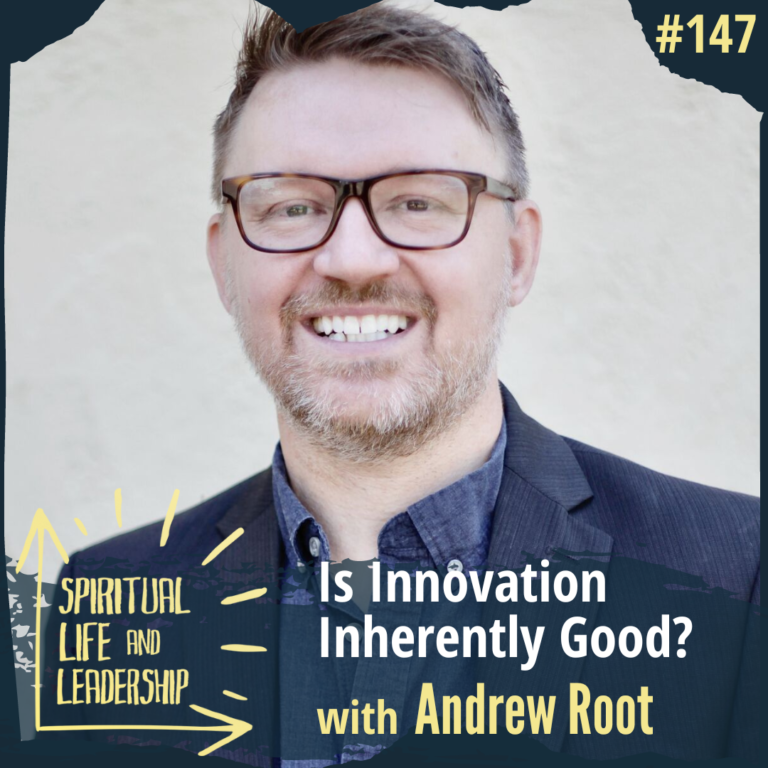
Andrew Root is the Professor of Youth and Family Ministry at Luther Seminary and author of The Church After Innovation. In this conversation, Andrew Root, the author of The Church After Innovation, invites us to think critically about innovation. We live in a world in which innovation is held up as almost an ethical good in and…
Comments are closed.
Great talk, Andrew. Looking at divorce from the child’s perspective instead of through the lens of an adult is key – thanks for bringing that up. Also, making it an ontological issue, first and foremost, is another great point. We are social creatures who derive our identity from our bonds.
Tangentially, it reminds me of the sociological study that showed rates of suicide dropped dramatically if a person felt like they were apart of a larger social unit and would disappoint those in the group if they committed suicide. Our very reason for being is grounded, in part, in the bonds we form and how strong they are in our life.
Thanks again for the talk.